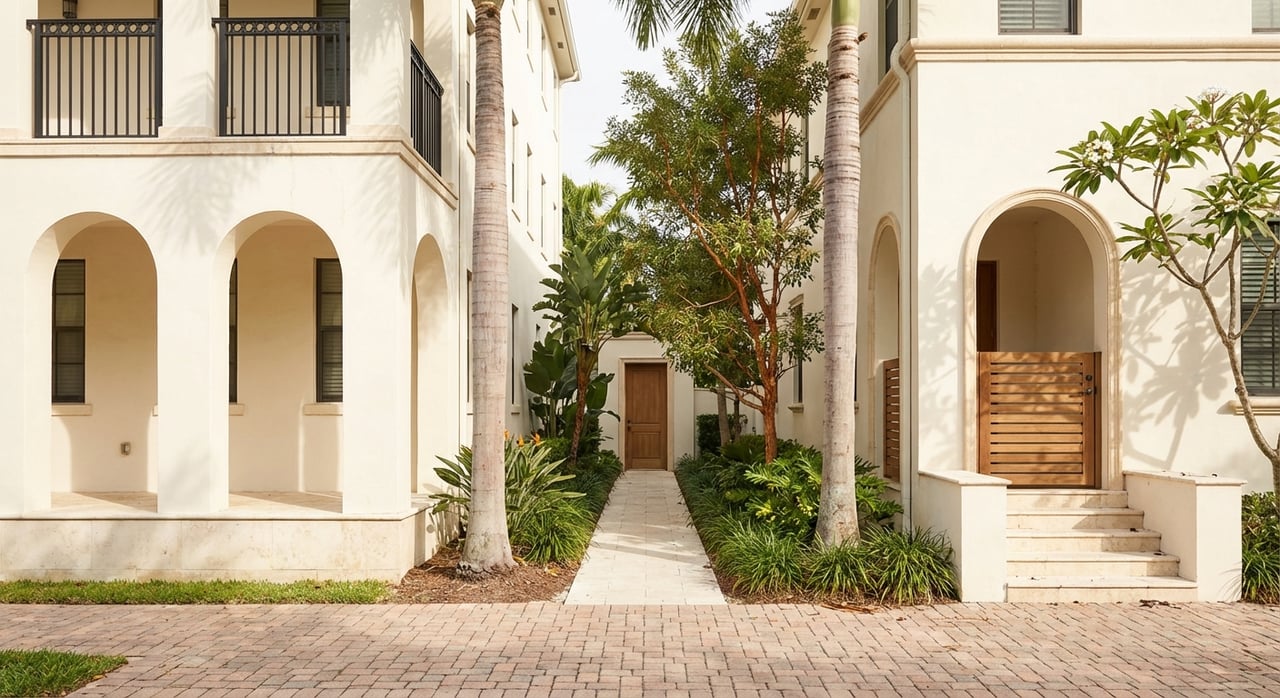
Wondering whether a condo or a townhome fits your life in Coconut Grove or Coral Gables? You are not alone. If you want low-maintenance living close to dining, parks and the bay, both options can work. In this guide, you will learn the key legal and lifestyle differences, what costs to expect, where each option commonly appears locally, and a clear checklist to buy with confidence. Let’s dive in.
Condo vs. townhome basics in Florida
Condo: what you actually own
In Florida, a condominium means you own the interior of a defined unit plus a shared interest in the common areas. The association manages the building and collects assessments. Rules and disclosures come from Florida’s Condominium Act, Chapter 718. You should review budgets, reserves and required disclosures before you buy. See the state statutes for details in Chapter 718.
Townhome: style vs. legal form
“Townhome” describes how a home looks, not how it is owned. A townhome can be fee simple with an HOA, or it can be a condo organized under Chapter 718. Many townhomes in Miami-Dade are fee simple under Chapter 720, which often means you own the structure and lot. Always check the recorded documents to be sure. Learn more about HOA rules in Chapter 720.
Why the legal form matters
Legal form decides who maintains and insures what. If you buy fee simple with an HOA, you typically handle your roof, exterior and lot. If you buy a townhouse-style condo, the association may cover exterior elements. That choice affects your insurance type, monthly fees and future resale risk. You can confirm this by reviewing the deed and the declaration of condominium in the contract package under Chapter 718.
Costs to compare in Grove and Gables
Median sale prices in Coconut Grove and Coral Gables are high relative to Miami-Dade overall, with Coconut Grove’s median around the upper $1.7–1.8 million range and Coral Gables near the mid $1.6 million range in recent snapshots. Individual condos and townhomes vary a lot by building, block and proximity to the bay. Focus on total monthly cost, not just price.
HOA and condo assessments
Association fees across South Florida have climbed as buildings respond to higher insurance costs and new reserve rules. Fees can range from the high hundreds to several thousand dollars per month depending on age, services and waterfront exposure. Recent reporting highlights sharp increases since 2019. See an overview of fee trends in this news analysis of condo and HOA fees.
Insurance and flood coverage
For condos, you usually carry an HO-6 policy for interiors and liability, while the association holds a master policy that may be bare walls-in or more comprehensive. Fee-simple townhomes often need broader HO-3 coverage since you own the structure. Many Grove and Gables parcels sit near waterways, so lenders may require flood insurance if the property is in a FEMA Special Flood Hazard Area. Check parcel risk with the FEMA Map Service Center and explore local scenarios with NOAA’s Sea Level Rise Viewer.
Special assessments and reserves
After the 2021 Surfside collapse, Florida now requires milestone inspections and structural integrity reserve studies for many 3-plus story buildings, and associations must budget for specific line items. Ask if the building completed its SIRS and whether reserves are fully funded. The state’s Division of Condominiums explains the rules in its SIRS and condo FAQ.
Financing for condos vs. townhomes
Lenders review condo projects for financial health, reserve strength, insurance coverage and any large special assessments. Some projects may require higher down payments or may be ineligible for certain loan types until repairs or reserves are addressed. Work with a lender who understands Miami-Dade condo underwriting and can pre-check project status. Get context from Fannie Mae’s perspective on condo lending.
Lifestyle tradeoffs to weigh
Condos: low maintenance, high service
Condos shift most exterior and building-system upkeep to the association, which is a major win if you want very low daily maintenance. In Coconut Grove, bayfront towers on South Bayshore Drive deliver full-service amenities. Projects like Grove at Grand Bay and the Park Grove campus offer concierge-style services, fitness, pools and more. Expect higher monthly dues when amenities are extensive. The legal framework for owner and association responsibilities is set by Chapter 718.
Townhomes: more privacy, more control
Townhomes often give you multi-level living, a private entrance, a small yard or patio, and frequently an attached garage. If fee simple, you usually handle roof and exterior items yourself, which can lower monthly HOA fees but raises your personal responsibility for repairs. If the townhome is organized as a condo, the association may cover exterior elements. Confirm who maintains what by reviewing the governing documents under Chapter 720 or Chapter 718.
Where you find each option locally
Coconut Grove patterns
- Bayfront and South Bayshore Drive: Larger, amenity-rich condo towers sit here, with lifestyle perks and higher assessments.
- Downtown Grove near CocoWalk: Low to mid-rise condos mixed into a walkable core close to restaurants and parks.
- Townhome pockets: Clusters appear around Oak Avenue, Shipping Avenue and Gifford Lane, plus a few gated enclaves. Townhomes are scarcer than condos and single-family homes, which can affect pricing and availability.
Coral Gables patterns
- Along the Waterway and Edgewater Drive: Mid and high-rise condos with views and resort-style amenities, including well-known addresses like the Gables Club.
- Near Miracle Mile and Merrick Park: Boutique and mid-rise condo buildings close to shops and dining.
- Townhome enclaves: Small fee-simple or HOA townhome communities near Coral Way and pockets off the downtown grid. Examples include established townhome addresses that blend private garages with minimal yard work.
A simple decision framework
- Budget: Compare the full monthly picture, mortgage, HOA or condo dues, homeowners and flood insurance, and taxes. A lower price with high dues can cost more than a higher price with modest dues.
- Maintenance tolerance: If you want minimal exterior work, condos usually win. If you want a small yard and garage, townhomes often fit better.
- Flood and storm risk: Check FEMA flood zones, elevation certificates and insurance quotes for any waterfront or low-lying parcel using the FEMA Map Service Center.
- HOA stability and reserves: Buildings with thin reserves face higher risk of special assessments. Post-Surfside rules make SIRS and milestone inspections central. Review your building’s status in the DBPR’s condo FAQs.
- Financing constraints: If you plan to use conventional or FHA financing, ask your lender to confirm project eligibility early. Learn why this matters in Fannie Mae’s condo lending overview.
Due-diligence checklist you can use
- Governing documents: Declaration, bylaws, rules and covenants. Confirm fee simple or condominium form under Chapter 718 or Chapter 720.
- Financials and reserves: Current budget, bank balances, recent financial statements, reserve study and SIRS status. See the DBPR’s condo FAQs.
- Board minutes: Review 12 to 24 months of meeting minutes for litigation, planned assessments and major repairs. Reference Chapter 718 for records and disclosures.
- Insurance summary: Association master policy details, coverage limits and renewal history, plus what the owner must insure. Check Chapter 718 for association obligations.
- Required disclosures: Obtain any statutory condo or HOA disclosure forms and the seller’s statements where applicable. Review the rules in Chapter 718 and Chapter 720.
- Building age and inspections: Year built, certificate of occupancy date, milestone inspection status, SIRS completion and any structural repair timelines. See the DBPR FAQ.
- Flood and wind exposure: FEMA flood zone, elevation certificate and recent claims history. Get NFIP and private flood quotes. Use the FEMA Map Service Center.
- Lender pre-check: Ask your lender to run or confirm project eligibility and underwriting requirements before you waive contingencies. Read Fannie Mae’s guidance.
Practical tips for first-time buyers and downsizers
- If dues feel high, request reserve studies and recent board minutes, then negotiate credits or timing if major projects are imminent. A quick primer on reserve studies is here: What a reserve study costs in Florida.
- For townhomes, clarify who owns and maintains the roof, exterior and landscaping. For condos, confirm if the master policy covers windows and interiors, and what you must insure under Chapter 718.
- If flood risk is a concern, ask for an elevation certificate and price flood insurance before finalizing your offer. Start with the FEMA Map Service Center.
Ready to compare properties?
Both condos and townhomes can deliver easy living in Coconut Grove and Coral Gables. If you want building services and lock-and-leave freedom, a condo near the bay or downtown hubs may be the move. If you want a private entrance, small outdoor space and a garage, a townhome pocket in the Grove or near Coral Way could be a great fit. When you are ready to tour options, review budgets and reserves, and line up a lender who understands local projects, reach out. Jessica Deaunovich will help you map choices to your lifestyle and budget, then navigate the details with confidence.
FAQs
What is the core difference between a condo and a townhome in Florida?
- A condo is ownership of a defined interior plus shared common areas under Chapter 718, while a townhome can be fee simple under Chapter 720 or a condo, so maintenance and insurance duties depend on the legal form.
How do condo fees in Miami-Dade impact my budget?
- Fees have risen across many buildings due to insurance and new reserve rules, so compare dues, reserves and any special assessments alongside your mortgage and insurance when you plan your monthly budget.
How do Surfside-related inspection and reserve rules affect buyers?
- Many 3-plus story condos must complete milestone inspections and SIRS, which can increase reserves or trigger assessments, so verify completion status and funding before you commit.
What insurance do I need for a condo or townhome near the bay?
- Condo owners often carry HO-6 interior coverage while associations insure the building, fee-simple townhomes typically need HO-3, and many bay-adjacent parcels require flood insurance based on FEMA flood zones.
How does financing differ for condos compared to townhomes?
- Condo loans include a project review of reserves, insurance and any assessments, which can affect loan options or down payments, while fee-simple townhomes are often underwritten like single-family homes.